The Zoom Action is less a rigid play and more a trigger. It creates space, forces decisions, and opens simple, high-percentage finishing opportunities. When taught as a principle, not a script, it becomes a staple of game-realistic offense.
The Zoom Action is one of those moves that looks simple on paper but unlocks a dozen scoring options when the details are right. In modern 5-out offenses it works as a trigger - a sequence that creates a defensive reaction and a clear read for your ballhandler and off-ball players. In this article you’ll get the concept, the reasoning, and practical drills (with video) so you can teach it the way your players will use it in games.
What is the Zoom Action?
The Zoom Action is a two-step offensive trigger that combines a down screen and a handoff, giving the offense two chances to create separation before the defense can react.
It starts with an off-ball screen (often a down screen), allowing the cutter to shake their defender and move toward the ball. As that happens, the ballhandler - typically on the wing or corner - steps toward the cutter and executes a dribble handoff (DHO).
This combination forces the defender to fight through two actions in quick succession - first the screen, then the handoff. By the time they recover, the offensive player already has a running start, clean separation, and multiple options to attack.
How it works
- The screener [3] sets a solid off-ball screen for the receiver [1]
- The receiver sprints toward the ball and flows directly into a handoff.
- The ballhandler [5] executes a dribble handoff and rolls, pops, or spaces — depending on spacing rules.
- The receiver reads the defense: attack, pull-up, or kick to the open man.
Reading the Defense – Four Options After the Handoff
Once the receiver comes off the handoff, the read is everything.
These four simple options cover nearly every situation. Teach players to recognize them and react without hesitation.
Dribble Drive
1. Attack the Rim
If the defender is trailing behind, the receiver should immediately attack the paint.
This forces the defense to collapse and opens passing lanes to the weak-side corner or ball-side wing.
Encourage players to finish strong but stay ready to kick out if help arrives early.
Catch and Shoot
2. Catch-and-Shoot Three
When the defender goes under the handoff, the receiver has one job — shoot in rhythm.
The Zoom Action naturally creates separation at the top or wing, making it a perfect setup for
confident catch-and-shoot threes.
Reinforce spacing and timing so shooters are ready before the handoff even happens.
Pick and Roll
3. Hit the Roller
If the defense switches or overplays the handoff, the ballhandler often becomes the open man.
The receiver should quickly recognize the roll and make a pocket pass or drop pass to the roller for a finish at the rim. This keeps the defense rotating and rewards quick reads instead of scripted actions.
Rescreen
4. Rescreen and Re-attack
If the first action doesn’t create an advantage, don’t reset - rescreen.
A quick rescreen or flip of the angle forces the defender to navigate another decision instantly. This simple adjustment keeps pressure on the defense and often opens the middle for a drive or kick-out.
Advantages of the Zoom Action
- It forces the defense to guard multiple actions in quick succession. They have to fight through a screen and immediately deal with a handoff - constant pressure, zero rest.
- It gets your shooter the ball on the move with built-in separation. Perfect for modern offenses where speed and decision-making matter more than set positions.
- It creates natural gaps and spacing for drives and kickouts. The movement stretches help-side defenders and opens clean passing lanes.
- It easily flows into further actions - re-screens, slips, or post entries - making it a seamless part of a motion or 5-out offense.
- It works without restricting creativity. If you run a 5-Out Motion Offense, the Zoom Action is one of the cleanest ways to start breaking down a defense, without taking away freedom or spontaneity.
Variations of the Zoom Action
The Zoom Action is adaptable. The same principle yields different advantages depending on alignment and the number of screens.
Below are three commonly used variations and the tactical rationale for each.
Staggered Zoom
The Staggered Zoom adds a second off-ball screener to the action, creating a staggered setup that gives the cutter more time and separation before receiving the handoff.
Against pressure defenses, this extra screen helps disrupt defensive timing and generates cleaner lanes for the handoff.
Tactical note: The stagger forces defenders to navigate three successive interactions, increasing the likelihood of defensive breakdowns and clean finishing opportunities.
Middle Zoom
The Middle Zoom shifts the entire action to the center of the floor, usually out of a 5-Out setup.
The big receives the ball in the slot while a screen lifts a guard from the wing into the middle handoff. This central alignment opens up both sides of the court and makes defensive help rotations much harder.
Tactical note: With open space on both sides, defenders can’t load up on the strong side, allowing free choice for drive or kick.
Horns Zoom
The Horns Zoom begins from a Horns alignment with two players at the elbows.
The point guard enters the ball to one big, then clears to the side to set up the next action. The opposite big sets a down screen for the wing, who flows into the handoff at the elbow. From there, the Zoom principles apply: drive, kick, or re-screen.
Tactical note: This variation flows naturally from Horns sets, offering flexibility to continue into pick-and-roll or post entries.
Inbound Plays Using the Zoom Action
The Zoom Action also works great for inbound plays, whether from the baseline or the sideline.
These quick-hitter options use the same principles to create instant motion and confusion for the defense.
BLOB – Baseline Out of Bounds
The inbounder passes to a big near the elbow or the slot. Immediately after the pass, the inbounder receives a down screen and flows directly into a handoff. This quick action shifts the ball from the baseline to the top — and back into the paint — before the defense can fully set up.
Tactical note: Ideal for quick scoring opportunities out of timeouts or dead-ball situations. The movement chain creates early confusion and open lanes.
SLOB – Sideline Out of Bounds
The inbound pass goes to the big positioned at the slot. Player 4 sets a down screen for the corner player, who comes up to receive the dribble handoff. From there, all standard Zoom Action reads apply — drive, kick, or re-screen.
Tactical note: This sideline setup uses spacing and quick movement to turn a static inbound into a dynamic scoring action within seconds.
Counters and Wrinkles
No action works every time. And that’s exactly why we build counters and wrinkles into our Zoom setup.
Here are three simple adjustments you can use when the defense starts reading your base action.
Backdoor Cut on a Switch
When the defense switches aggressively on the down screen, the cutter can instantly backdoor cut instead of taking the handoff. This counter punishes defenders who overplay and helps you generate easy finishes at the rim.
Tactical note: Works best if the screener’s defender shows high or helps early, leaving the paint open for a quick pass.
If the defense denies the receiver’s path to the handoff, the screener can turn and take the ball directly from the ball handler. This keeps the play alive while reversing the roles - the screener becomes the new decision-maker.
Tactical note: Great for maintaining flow and rhythm — the action continues even if the initial handoff is cut off.
Handoff by the Screener
Slip or Basket Cut by the Screener
When the defense is focused on the screen or switches too early, the screener can fake the screen and slip straight to the basket. The timing of this movement often catches defenders ball-watching, creating an uncontested layup.
Tactical note: Use the slip sparingly - it’s most effective when the defense expects contact on the screen.
Video — Zoom Action (Concept & Walkthrough)
Watch the full concept video:
Allow marketing cookies to load this YouTube video. Loading it sends data to YouTube.
Watch on YouTube (opens in a new tab)Drills to Teach the Zoom Action
Teaching the Zoom Action isn’t about memorizing steps. It’s about helping players feel the timing, spacing, and rhythm of the action.
These three small-sided drills turn the concept into game-realistic reps your players can learn from immediately.
1️⃣ 1v1 Handoff Read
Start with a ball handler on the baseline and a receiver on the wing. The offense passes to the wing and follows the pass into a handoff while guarded by a defender.
From there, it’s live 1v1 play. The ball handler can drive, pull up, or reject the screen.
To adjust the difficulty, limit the dribbles, allow re-screens, or change how the defender guards the action. This drill teaches timing, spacing, and reading the handoff under pressure.
2️⃣ 2v2 Zoom Game
Now we add another layer. Two offensive players start in the corners, each guarded by a defender. One begins with the ball and dribbles along the three-point line. The opposite corner player cuts toward the ball to receive the handoff - and once it happens, the drill is live.
You can dictate defensive behavior (e.g., switch or fight over) or allow the ball handler to reject the handoff entirely. This setup naturally trains decision-making, spacing, and reaction to defensive coverage.
3️⃣ 3v3 Guided Discovery
Here’s where players start discovering the Zoom Action themselves. The only rule: every possession starts with an off-ball screen followed by a handoff. Players must figure out how to create and use the advantage — and they’ll quickly learn what works.
Add constraints like rotating positions or limiting the playable space to increase creativity and decision speed. This drill connects directly with the Constraints-Led Approach (CLA), making it ideal for modern player development.
🔍 Conclusion
If you want your team to own the Zoom Action, don’t over-explain it - let them experience it.
These progressive small-sided drills teach players to make reads, react faster, and execute the action at game speed.
Important: These drills intentionally prioritize decision-making and spacing can be perfectly aligned with the CLA.
Video — Zoom Drills
👉 Watch the full breakdown of all three drills here:
Important: Use them as small-sided games where players must read and react - not memorize steps.
Allow marketing cookies to load this YouTube video. Loading it sends data to YouTube.
Watch on YouTube (opens in a new tab)Practical Coaching Tips (Quick Wins)
- Reward early finishes: give extra points for quick, clean finishes to encourage the initial push.
- Teach the read: practice the defender’s reaction - drill the recognition more than the cut (e.g. dictate different defensive coverages).
- Small rules yield big changes: a small constraint (e.g., ball handler must decide within zero seconds) forces quicker decisions and better spacing.
Downloadable Guide & Resources
If you want the complete Zoom Action guide (full diagrams, step-by-step progressions), grab the free PDF here:
👉 Complete Zoom Action Guide (free PDF)
Also, check related content:
- Transition Offense — full breakdown
- Drill Library — find related SSGs and drill PDFs
- All Free Coaching PDFs and Resources
Congratulations!
You’ve now got a solid understanding of the Zoom Action - one of the most
effective entry triggers for a 5-Out motion offense when coached as a principle.
When you combine it with small-sided games and a constraints-led approach, your players learn to create and exploit space rather than just run plays. That’s how good teams keep the ball moving, punish lazy rotations, and get high percentage shots consistently.
Want to build better Zoom Action reps into practice?
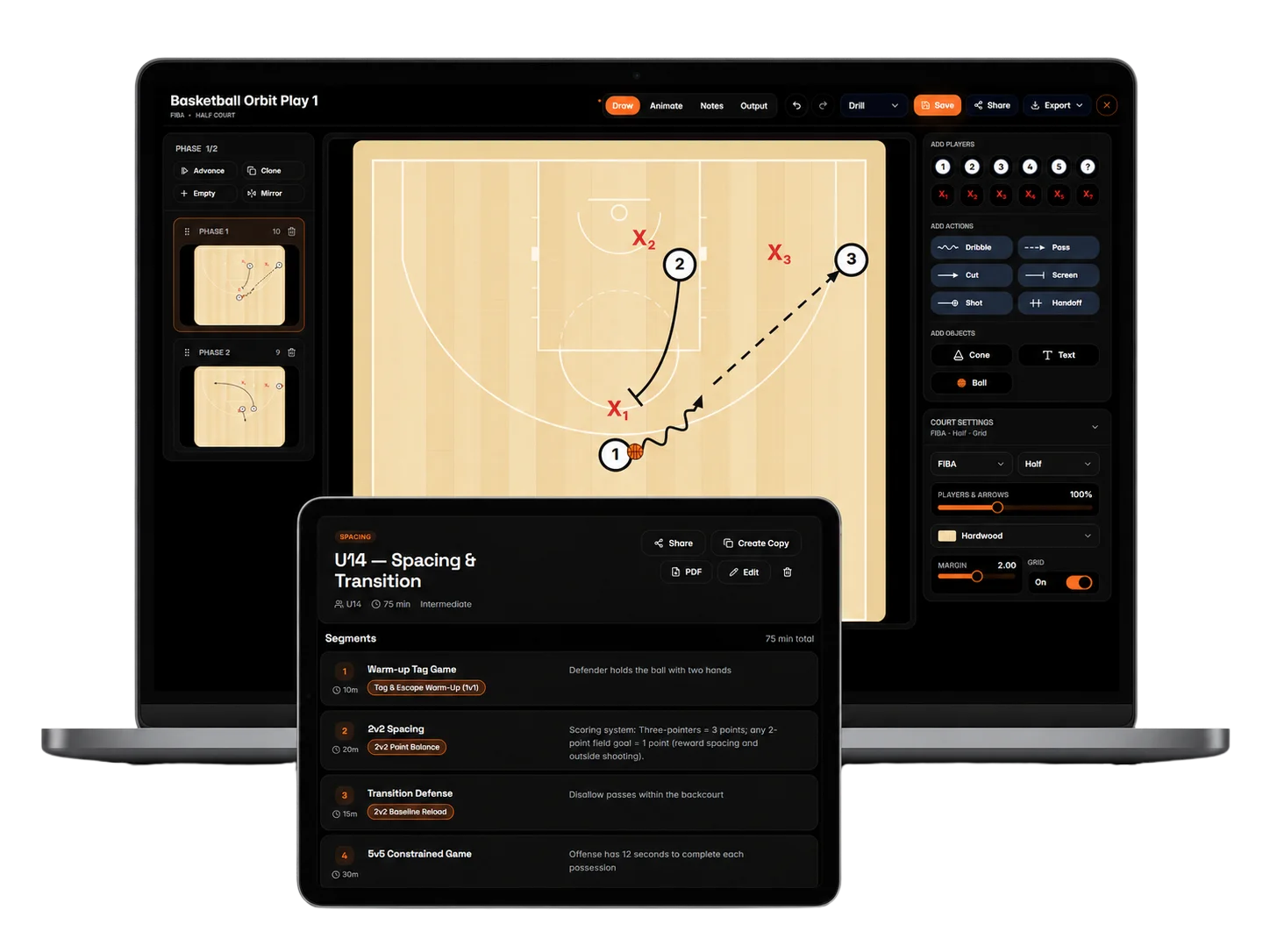
Teach the reads behind the action — not just the action itself. The Basketball Orbit Practice Planner helps you turn those details into a complete session with visual drills, constraints, and coaching notes.
👉 Basketball Orbit Practice Planner
Create the drill, organize the practice flow, and refine your teaching points with Orbit AI before you step on the court.
Written by Chris Bernhard — Basketball Orbit
© 2025 Basketball Orbit