Most coaches treat offensive rebounding and transition defense as a trade-off.
Send more players to the glass, and you risk giving up an easy layup. Sprint everyone back, and you concede second-chance opportunities before the shot even comes off the rim.
Tagging Up challenges that choice. Instead of assigning two players to crash and three to retreat, all five players move toward the glass while establishing a position that can also protect transition.
That does not make Tagging Up a shortcut or a guarantee. It is a demanding team system built on four connected habits: step forward on the shot, find the high side, scrum legally, and defend immediately. This guide explains each rule, the mistakes that break the chain, and a practical progression for teaching the system.
Watch the Tagging Up Video Breakdown
The video below gives you the complete visual introduction. The article then takes the next step with coaching details, practice design, common errors, and questions to help you decide whether the system fits your team.
Allow marketing cookies to load this YouTube video. Loading it sends data to YouTube.
Watch on YouTube (opens in a new tab)What Is Tagging Up in Basketball?
Tagging Up is an offensive rebounding and transition defense system developed and taught by coach Aaron Fearne. When a shot goes up, every offensive player finds the defender who guarded them, gets to that defender's high side, and makes contact.
The high side is the side closer to half court. By winning that position, the offensive player stays between the opponent and the basket their team will defend next.
If the defense is rotating and your original defender is no longer clear, communicate and tag the closest available opponent. The responsibility is based on who defended you at the shot, not necessarily your preferred defensive matchup.
The idea appears simple, but the intention matters. Players are not blindly chasing the ball. They are covering the people who can secure it. A rebound must finish with a player, so Tagging Up tries to turn those matchups into contested balls while keeping all five opponents in front of the offense.
The PGC Tag-Up Offensive Rebounding System cheat sheet describes this as an early matchup that connects offensive rebounding directly to transition defense. Slappin' Glass makes the same distinction: Tagging Up belongs to both phases of the game, not just the fight for an offensive rebound.

The Four Rules That Hold the System Together
Tagging Up works as a chain. If one link disappears, the team can be exposed. Teach the rules in order before asking players to execute them in full-speed 5v5.
1. Step Forward When the Shot Goes Up
The first movement is toward your tag.
No standing and watching. No backpedaling toward half court. No early leak-out.
That first step closes the distance before the defender can turn, locate the ball, and create a clean block-out angle. It also gives every player an immediate job, which removes the hesitation that often appears when teams use mixed rules such as "guards get back, forwards crash."
The shooter still holds the finish, but then must locate the defender who closed out. If that defender flies past the shot and runs, the shooter goes with them. Losing the closeout defender can leave nobody between that player and the far basket.
Coaching cue: Shot goes up, body goes forward.
2. Win the High Side
Move to the hip closer to half court and establish legal contact. The goal is to stay above the opponent, not to sprint past them toward the rim.
This positioning is more important than predicting the bounce. Even if the ball looks available, do not outrun the tag. If you miss the rebound after passing the opponent, that player can run behind the entire coverage.
The same risk appears when a player slips underneath a block-out from the low side. That route may create one rebounding chance, but it also gives up the transition position the system depends on.
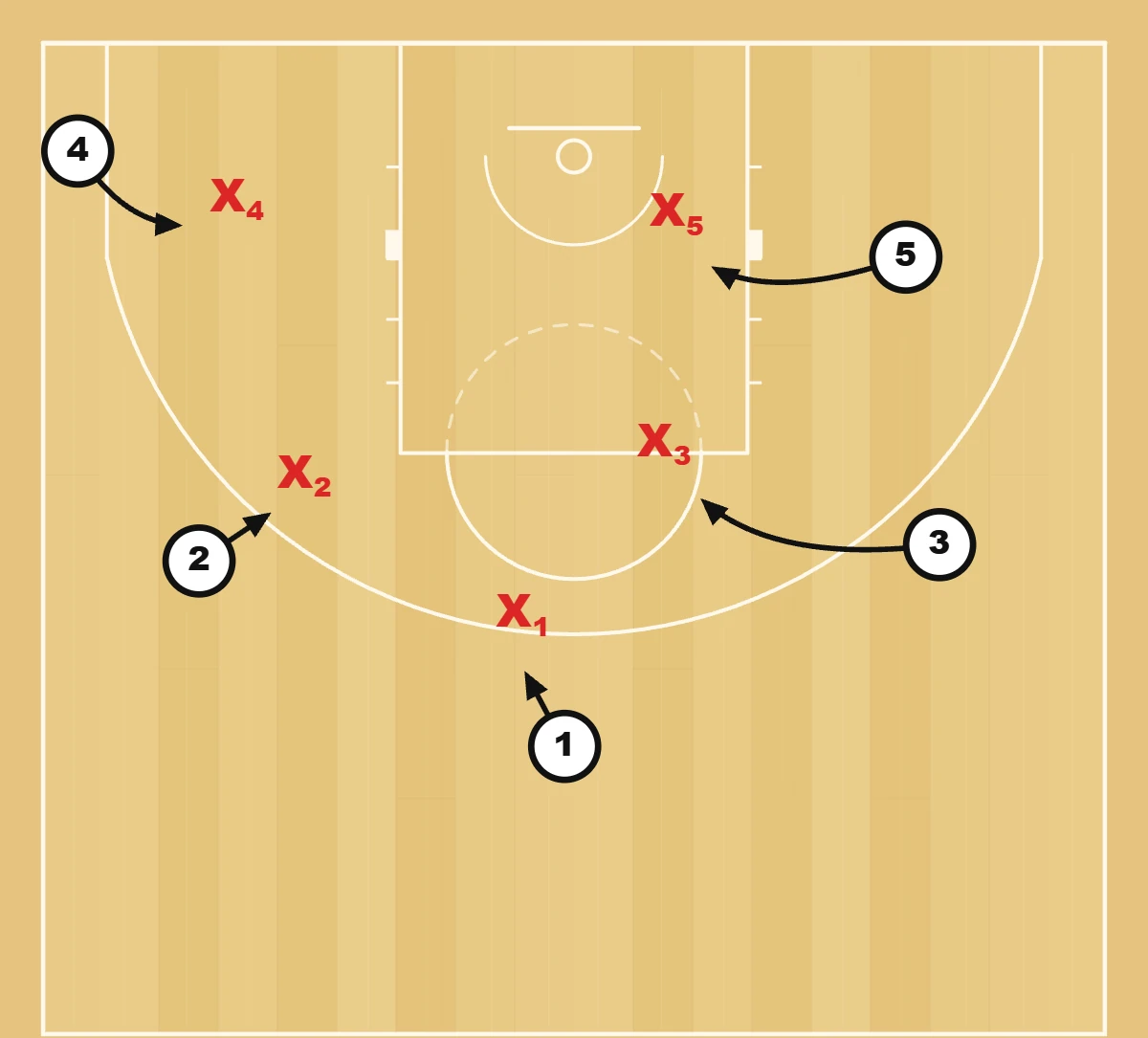
In the diagram, every numbered offensive player moves toward the high side of the corresponding defender. The exact spacing will change with the shot location and defensive rotation, but the reference remains the same: find a body and stay between that player and half court.
Coaching cue: High hip first, ball second.
3. Scrum Legally and Compete
Once players establish the high side, they use the lower body to move the defender toward the paint. Fearne calls this scrumming, borrowing the term from rugby.
The technique should be physical without becoming reckless:
- make contact with the hips and lower body
- keep the arms under and up, ready to tip or secure the rebound
- drive the opponent toward the paint instead of pushing with the hands
- stay off the back and avoid extending through the defender
- tip difficult balls outward or create a dead-ball rebound when control is impossible
Moving the defender deeper has two potential benefits. It improves the offense's position to contest the rebound, and it can force the defense to secure the ball close to its own baseline rather than already moving up the floor.
The Breakthrough Basketball overview recommends teaching scrumming before adding the full rebounding battle. That sequence helps players understand that legal position creates the opportunity; the ball is not permission to abandon the tag.
Coaching cue: Hips in, hands up.
4. Defend Immediately
If the defense secures the rebound, do not search for your normal matchup. Stay with the player who defended you on the shot.
From there, organize the first seconds of transition:
- The closest player pressures and slows the ball.
- Players on the ball side take away easy advance and parallel passes.
- The remaining players sprint back and flood the middle.
- Everyone communicates cross-matches and protects the basket.
- Switch back to preferred matchups only after the immediate threat is controlled.
Flooding the middle creates a wall against straight-line drives, long passes, and early drag screens. The objective is not necessarily to steal the ball. It is to make the opponent spend time and effort before entering offense.
The same principle continues after a made shot. Stay connected to the tag, make the inbound difficult, and contest the first pass without giving up the basket behind the pressure.
Coaching cue: Defend who defended you.
Why Teams Use Tagging Up
The appeal is not simply "five players crash the glass." It is the attempt to solve multiple possession problems with one clear rule.
More Contested Rebounds
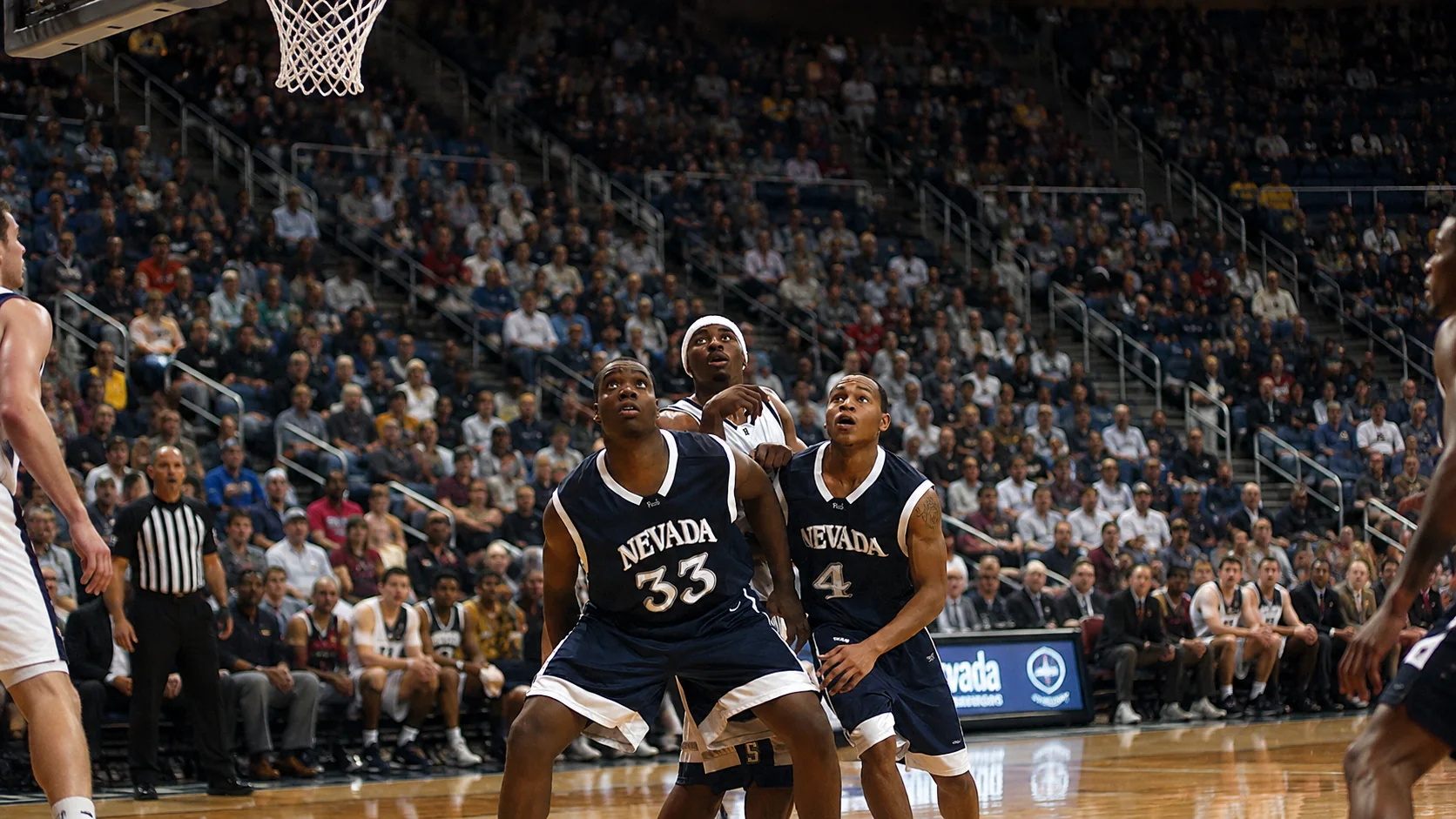
Nobody leaks out or watches the shot. All five defenders have someone applying pressure to their rebounding position, which can create more 50-50 opportunities and second possessions.
Earlier Transition Matchups
Players do not wait for the rebound result before deciding who to guard. Their tag is already in front of them, so the transition responsibility begins on the shot rather than after the outlet pass.
Clearer Accountability
Every player has the same first job. Coaches can immediately see who stepped toward a tag, who found the high side, and who disconnected from the system.
Immediate Full-Court Pressure
Because players stay attached after makes and misses, Tagging Up can flow into ball pressure without requiring a separate press call on every possession.
A 2025 analysis of Paris Basketball shows how the principle can work even when the offense does not collect the rebound: high-side position can reduce kick-aheads and buy time for teammates to form the transition wall. That is an important reframing. Offensive rebounds are a major benefit, but the system's value is also measured by the quality of transition opportunities it prevents.
The Costs You Must Be Willing to Accept
Tagging Up is not a universal answer. The system creates trade-offs of its own.
- Cross-matches: A guard may end up defending a big, or a big may be connected to a guard. Your team needs a plan for switching back safely or protecting a post mismatch.
- Offensive fouls: Poor scrumming technique can become a push, hold, or over-the-back foul. Physicality must stay legal.
- Conditioning demands: Five-player effort on every shot requires concentration, repeated contact, and the ability to defend immediately afterward.
- Communication in rotation: Broken plays and transition shots can make tags less obvious. Players must identify the closest open opponent instead of freezing.
- Complete buy-in: Four correct tags do not reliably protect the fifth gap. One spectator can break the structure.
Slappin' Glass describes expected trade-offs such as cross-matches and occasional offensive fouls as the system's "taxes." The more damaging errors are the avoidable "fines": losing the shooter's closeout defender, outrunning the coverage, or attacking underneath a block-out. That distinction gives coaches a useful review question: Was the outcome an accepted cost of our system, or did we violate a rule?
Common Mistakes That Break Tagging Up
Watching the Ball
Players who follow the flight of the shot lose the moment to establish contact. Train the shot as a movement cue: eyes can locate the ball after the body has found the tag.
Chasing a Rebound From the Low Side
The ball may look reachable, but low-side pursuit removes the player from transition coverage. Reward correct high-side position even when it does not produce a rebound.
Pushing With the Hands
Scrumming is lower-body leverage, not an extended-arm shove. If players cannot keep the arms under and up, reduce the speed and reteach the contact before returning to live play.
Returning to Preferred Matchups Too Early
Switching back while the ball is advancing creates communication gaps. First slow the ball and protect the middle. Exchange matchups when the defense is organized.
Using Tagging Up Only in a Rebounding Drill
A habit that disappears from the rest of practice will disappear in the game. Once the rules are introduced, include them in shooting games, advantage games, transition activities, and live scrimmage.
How to Teach Tagging Up in Practice
Start small enough that players can feel the position, then add the rebound, transition, and more bodies. The goal is not to explain the entire system at once. It is to preserve the same four-step chain as the environment becomes more game-like.
Stage 1: 1v1 High-Side and Scrum
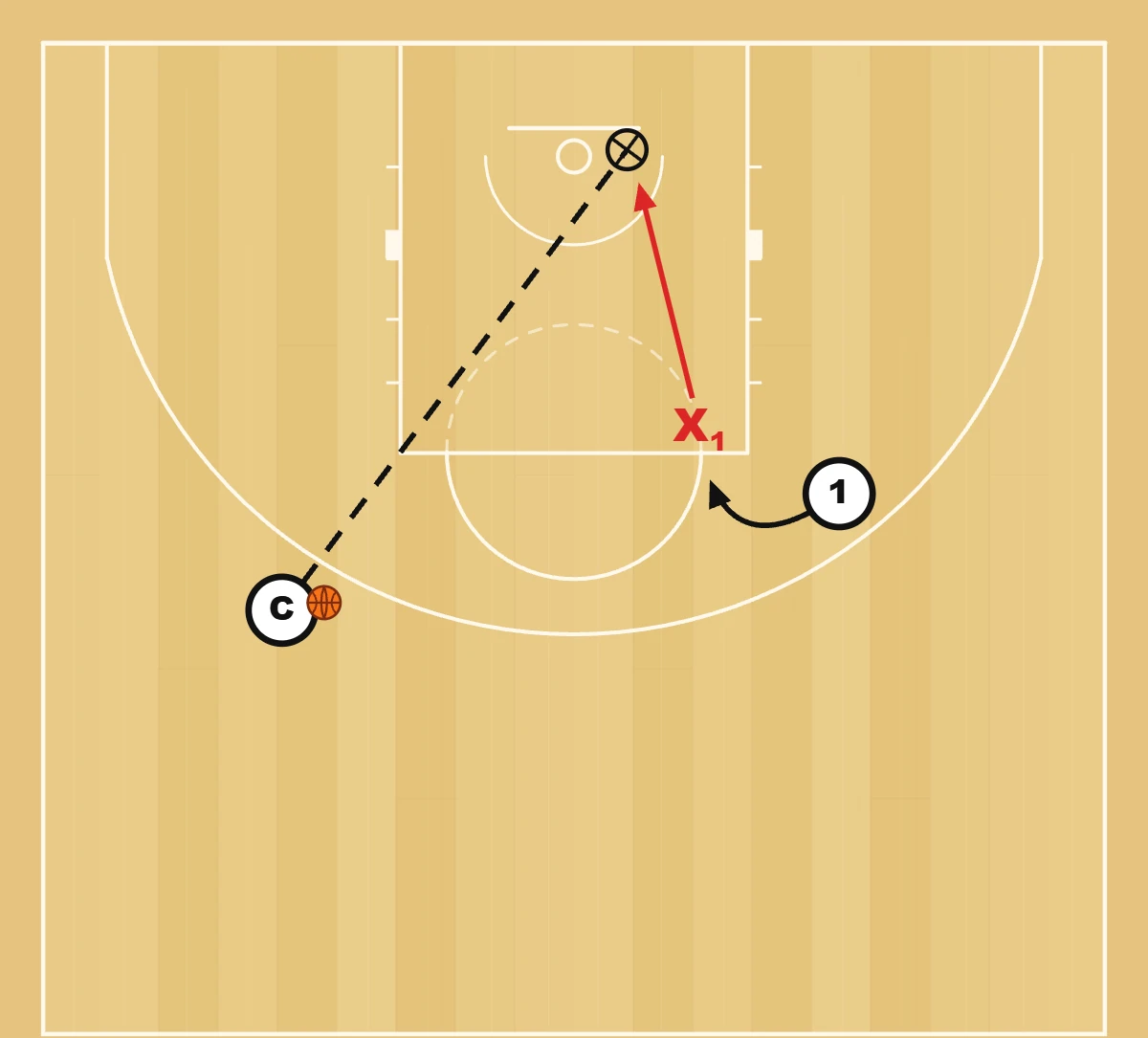
Setup: Place one offensive player and one defender in a common shot location. A coach shoots from the perimeter.
Action: On the release, the offensive player steps forward, finds the high hip, and scrums legally. Both players compete through the rebound.
Score: One point for an offensive rebound. One point for the defense if it secures the ball and gets beyond half court under control. No point for the offense if the high side was missed, even if the rebound was won.
Observe: First-step direction, contact point, arms under and up, and whether the offensive player stays above the tag.
Progression: Allow the defender to leak out occasionally. The offensive player must recognize "they go, you go" and stay connected.
Stage 2: 2v2 Through the Rebound
Setup: Begin with a short live action, such as drive-and-kick or a ball screen, so defenders must rotate before the shot.
Action: Play live on the shot. If the offense rebounds, continue at the same basket. If the defense rebounds, play transition to half court or to the opposite basket.
Score: Add one point for an offensive rebound, one for a transition stop, and subtract two for a missed tag. This scoring approach is also suggested in the Breakthrough Basketball teaching progression.
Observe: Communication when matchups change, shooter responsibility, immediate ball pressure, and middle protection.
Regression: Use a predictable coach shot and fixed matchups.
Progression: Vary the shot location or allow one defender to fly by and run.
Stage 3: Build From 3v3 to 5v5
Add players while keeping the possession continuous. Use 3v3 to expose communication and space, then 4v4 and 5v5 to reveal the full transition picture.
Do not stop every imperfect repetition. Track a small set of behaviors instead:
- percentage of players who make a legal tag on the shot
- offensive rebounds won
- missed tags
- transition paint touches or early shots allowed
- time required for the opponent to enter its offense
These measures tell you whether the system is improving both sides of the trade-off. Offensive rebound totals alone do not.
For a broader framework on turning one game problem into a coherent session, use the Basketball Orbit guide to practice planning. The key here is to carry Tagging Up into every live activity until the shot automatically triggers the correct response.
Is Tagging Up Right for Your Team?
Test the system rather than adopting it because another team uses it.
Tagging Up may be worth exploring if your team:
- gives up too many second chances by sending everyone back
- allows easy transition because rebounding responsibilities are unclear
- wants to apply pressure after both makes and misses
- can accept temporary cross-matches
- has the conditioning and discipline to repeat the behavior on every shot
Be more cautious if your team is already foul-prone, struggles to communicate, or depends on tightly controlled defensive matchups. Younger teams can still learn the concept, but the teaching may need more time and fewer rules at once.
A useful test block is two to three weeks. Track tag execution, offensive rebounding percentage, transition opportunities allowed, and fouls created by the technique. Then decide whether the benefits fit your players and your wider defensive identity.
Key Takeaways
- Tagging Up connects offensive rebounding and transition defense instead of treating them as separate jobs.
- All five players step toward the defender who guarded them when the shot goes up.
- High-side position takes priority over chasing the bounce.
- Legal scrumming uses hips and lower-body leverage while the arms stay under and up.
- After the defense rebounds, stay with the tag, slow the ball, deny the ball side, and flood the middle.
- Cross-matches, fouls, conditioning, and communication are real costs that must be trained.
- Build the habit from 1v1 to 5v5 and keep it active in every live drill.
Tagging Up will not fit every roster. But if your team keeps choosing between the offensive glass and transition defense, it gives you a structured third option to test.
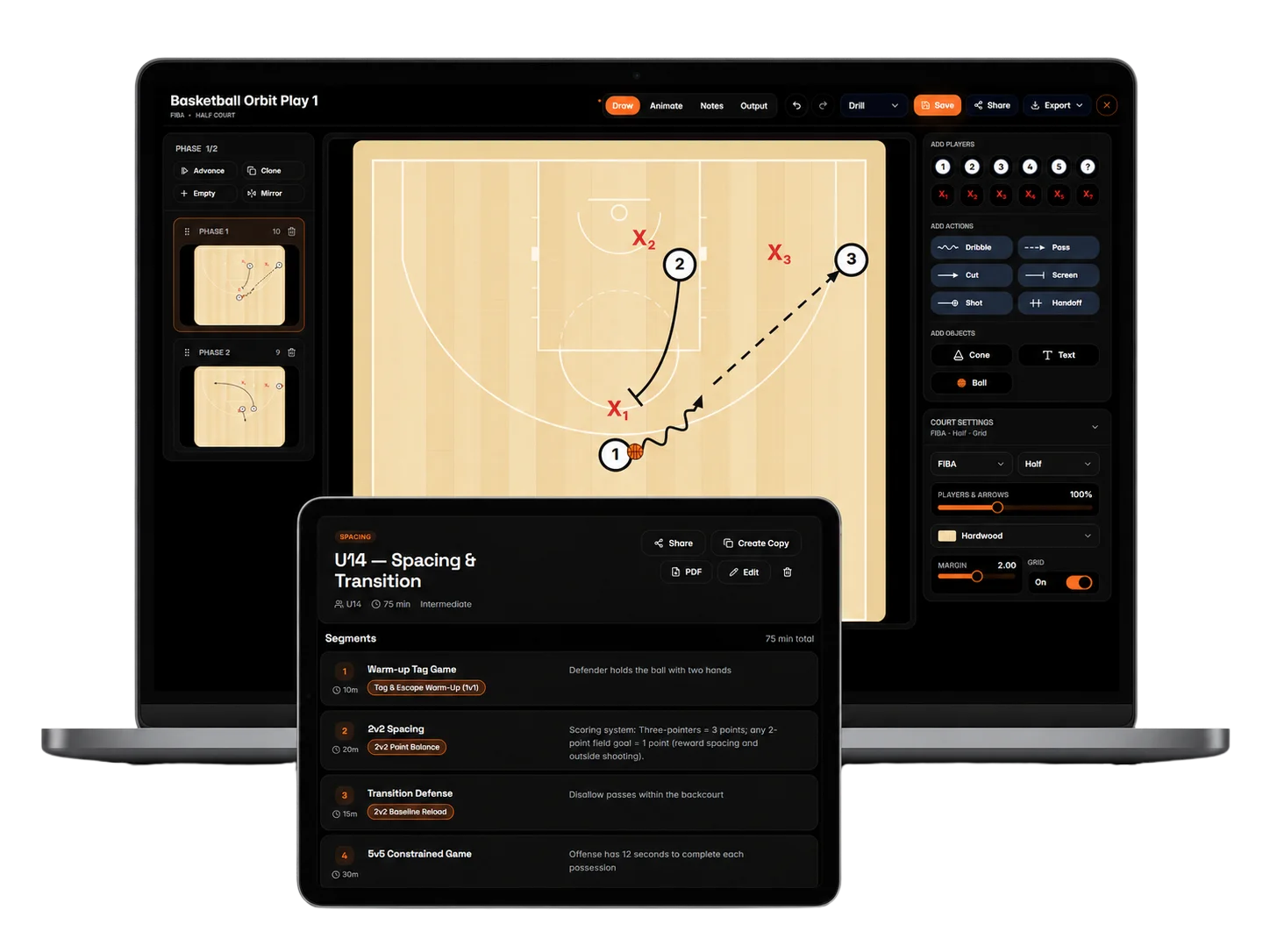
Turn the Tagging Up concept into a complete practice
Build the 1v1-to-5v5 progression, attach the four coaching cues to each drill, and keep your scoring constraints and transition observations in one place.
The Basketball Orbit Practice Planner helps you organize the session, create your own visual drills, and refine the practice flow with Orbit AI before you step on the court.